Most people have never watched a professional window film installation from start to finish. That creates a lot of reasonable questions: How long does it take? Will you need to move furniture? What does the process look like before the crew even arrives?
Those questions are important. A window film installation is an investment, and a process you don’t understand is harder to trust. This article walks through every phase of a Tint USA installation, from your first call to the final walkthrough, so there are no surprises on the day of the job.
The First Call Is About Your Problem, Not Our Products
When you contact Tint USA, you’re connected with a local representative who serves your specific area in the greater Carolinas and Virginia regions we cover.
That first conversation is about understanding your situation. What problems are you trying to solve? Heat in a west-facing conference room? Glare at a workstation? Privacy for a bedroom or bathroom? Break-in concerns for a retail storefront? The representative’s job is to listen before making any recommendation.
From there, an on-site consultation is scheduled. This is where the process gets specific, and where many window film decisions go wrong when they’re made without one.
The Consultation Is the Differentiator
This is one of the most important parts of Tint USA’s process, and it’s worth understanding before anything else.
A lot of window film recommendations are made by looks alone. A salesperson looks at your windows, makes an assumption about the glass type, and picks a film based on what they think might work. That approach produces results that usually work. It also produces installations that underperform, overpromise, or miss the actual problem because the glass was never properly evaluated.
Tint USA’s consultation process is different.
Every Glass Type Is Measured, Not Assumed
When a Tint USA technician arrives for your consultation, they bring a metering device that measures the actual performance of your existing glass: how much solar heat is passing through, how much is being reflected, and how much visible light comes in. Glass type, coating, age and orientation all affect these numbers. Two windows in the same room can behave differently depending on the direction they face.
This data helps the technician recommend a film type: it’s performance-driven, with guesswork involved.
You See the Film on Your Actual Windows Before You Commit
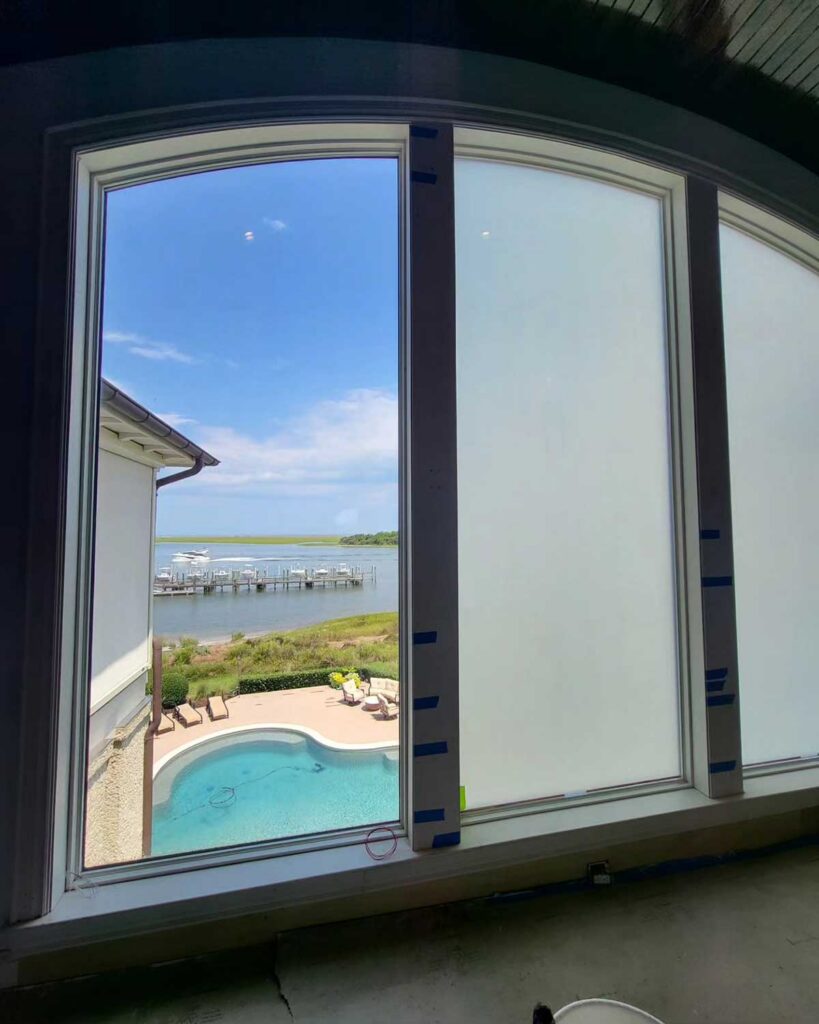
After metering, the technician selects film samples suited to your situation and installs them directly on your windows. Each sample is labeled. You observe the difference in light, heat and visibility in your actual space, under your actual conditions, not in a showroom under controlled lighting.
This process is less of a presentation and more of a test to ensure the product works for your goals and desires. You’re evaluating real performance data before committing to anything.
The Recommendation Comes With a Clear Explanation
After the evaluation, you receive a straightforward recommendation from your technician. They will:
-
- suggest a film
- explain why it fits your situation
- explain results you can expect after installation
If you’re weighing to options, your technician will explain the trade-offs in plain language. You leave the consultation with enough information to make a confident decision. No stack of brochures, no follow-up pressure call.
Scheduling and What to Do Before the Crew Arrives
Once you’ve selected your film and confirmed the project, a job date is scheduled. Most residential installations are completed in a single visit. Commercial projects may take days depending on scope, but still have a relatively quick turnaround time.
Before installation day, you’ll receive clear instructions on what needs to happen on your end. For residential projects, that typically means clearing a few feet of space around window frames and removing window treatments.
Commercial preparation varies by project. For occupied office buildings or retail spaces, we coordinate scheduling to minimize disruption to your operations.
Installation Day: What the Crew Does and How Long It Takes
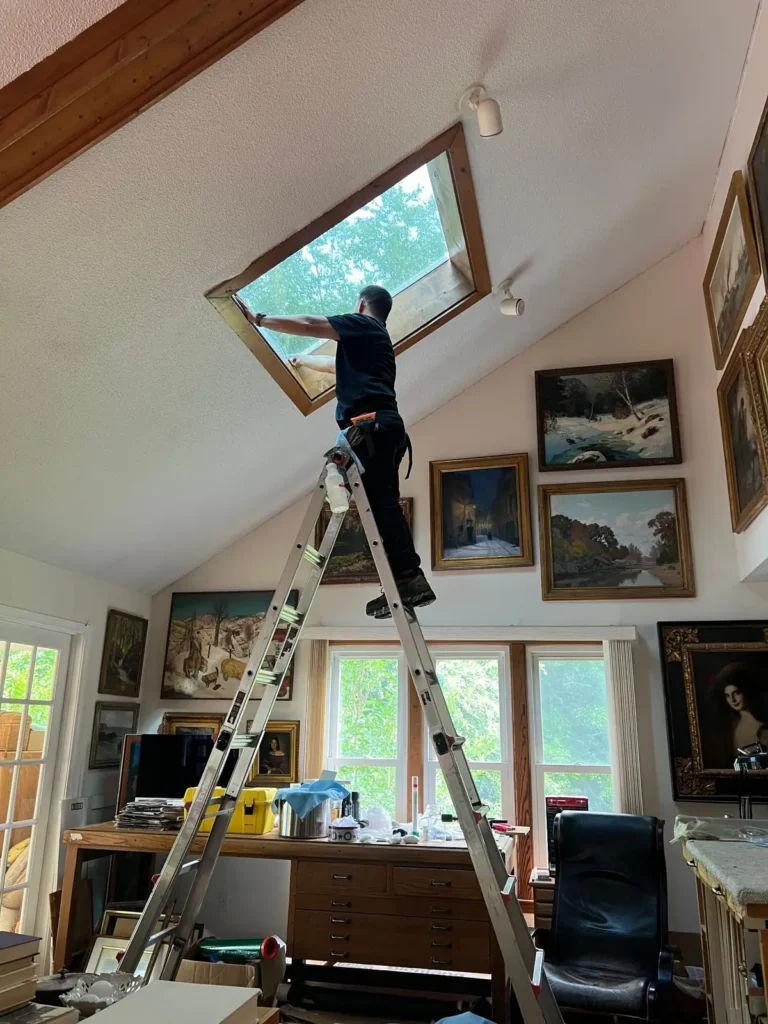
The crew arrives with all materials and equipment. Before any film goes on, every interior glass surface is cleaned thoroughly. This step is non-negotiable. Film applied to glass that wasn’t properly cleaned at the right moment traps contamination underneath the surface, and there’s no correcting that without removing and replacing the film entirely.
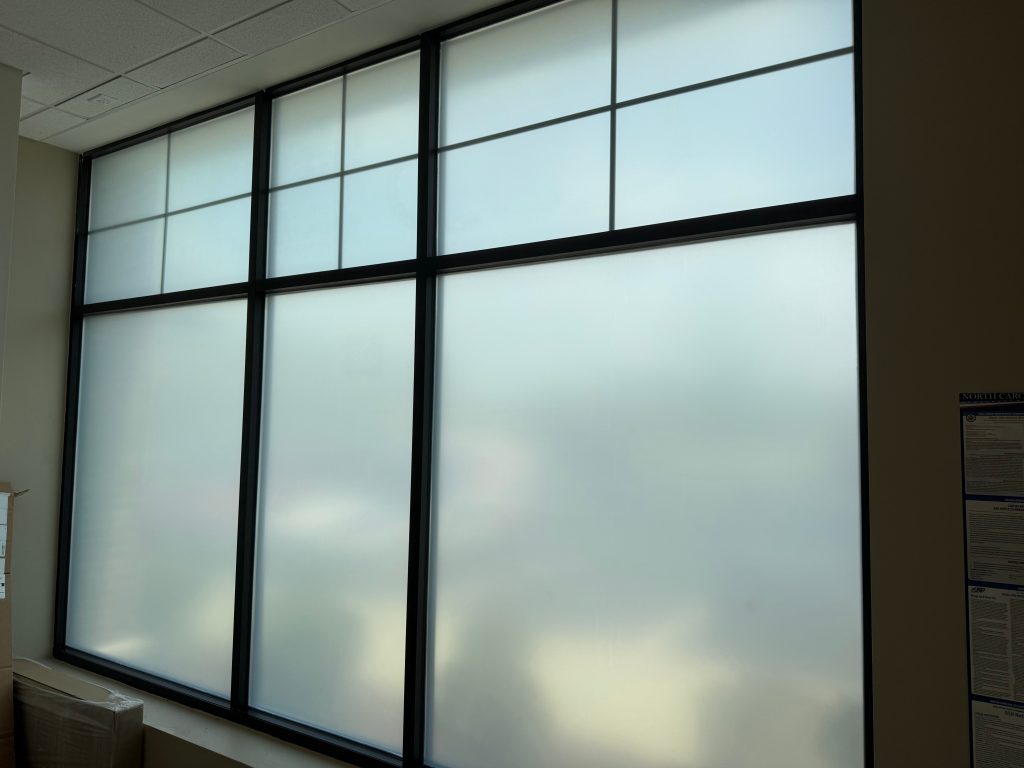
Film is cut to fit each window precisely, applied with a mounting solution, and seated with a squeegee to remove air and excess moisture. Edges are trimmed to exact dimensions. The crew works one window at a time, checking alignment and adhesion before moving to the next. Small variations in pressure, alignment and moisture removal affect how the film bonds, which is why the process is done methodically rather than rushed.
Installation time depends on project size and window complexity. A single-family home with eight to twelve windows typically takes three to five hours. A mid-size commercial floor with large glass panels may take a full day. Your representative will give you an accurate time estimate during the consultation.
The Curing Period
After installation, the film bonds to the glass over a curing period. Smaller areas are cured in several days, while larger, typically commercial projects can take a few weeks, or sometimes a couple months. During this time, you may notice small water pockets or a slightly hazy appearance in certain light. These are not defects. They are moisture between the film and glass that evaporates as the bond develops.
Avoid cleaning the windows or touching the film surface during this period. Your representative will give you a specific timeline based on your film type and the time of year. Warmer months speed the process. Cooler months slow it slightly.
The Final Walkthrough
Before the crew leaves, they walk through the completed job with you. Inspect each window in natural light. Check the edges, check the center of the glass, and raise anything that doesn’t look right. Professional film, properly installed, should be smooth and clear with no visible bubbles, debris or lifting edges.
If anything doesn’t meet that standard, it’s addressed before the crew packs up. The job site is cleaned before departure.
During the walkthrough, your technician will confirm everything looks right before the crew leaves, and we encourage our customers to use this time to address any concerns.
What Happens After the Job Is Done
Your local Tint USA representative remains your point of contact after installation. The same rep who handled your consultation handles questions during the curing period, follow-up service needs, or anything that warrants a second look.
Most commercial solar window films come with a 10-year limited manufacturer’s warranty. Your representative will review the specific terms that apply to your film at the time of consultation.
Once the film has fully cured, standard glass cleaning resumes. Normal glass cleaners work fine. Avoid abrasive products or tools that could scratch the film surface.
Ready to See the Process in Person?
The consultation is the best way to understand what window film can do for your specific space. There’s no cost or commitment required.
Schedule a free in-home estimate to get started for residential and commercial customers. We serve the Carolinas and Virginia and look forward to working with you.